
How Arena works.
Straight answers about the install, the platform, the coaching, and what happens if you decide to run on your own.
Frequently asked questions
-
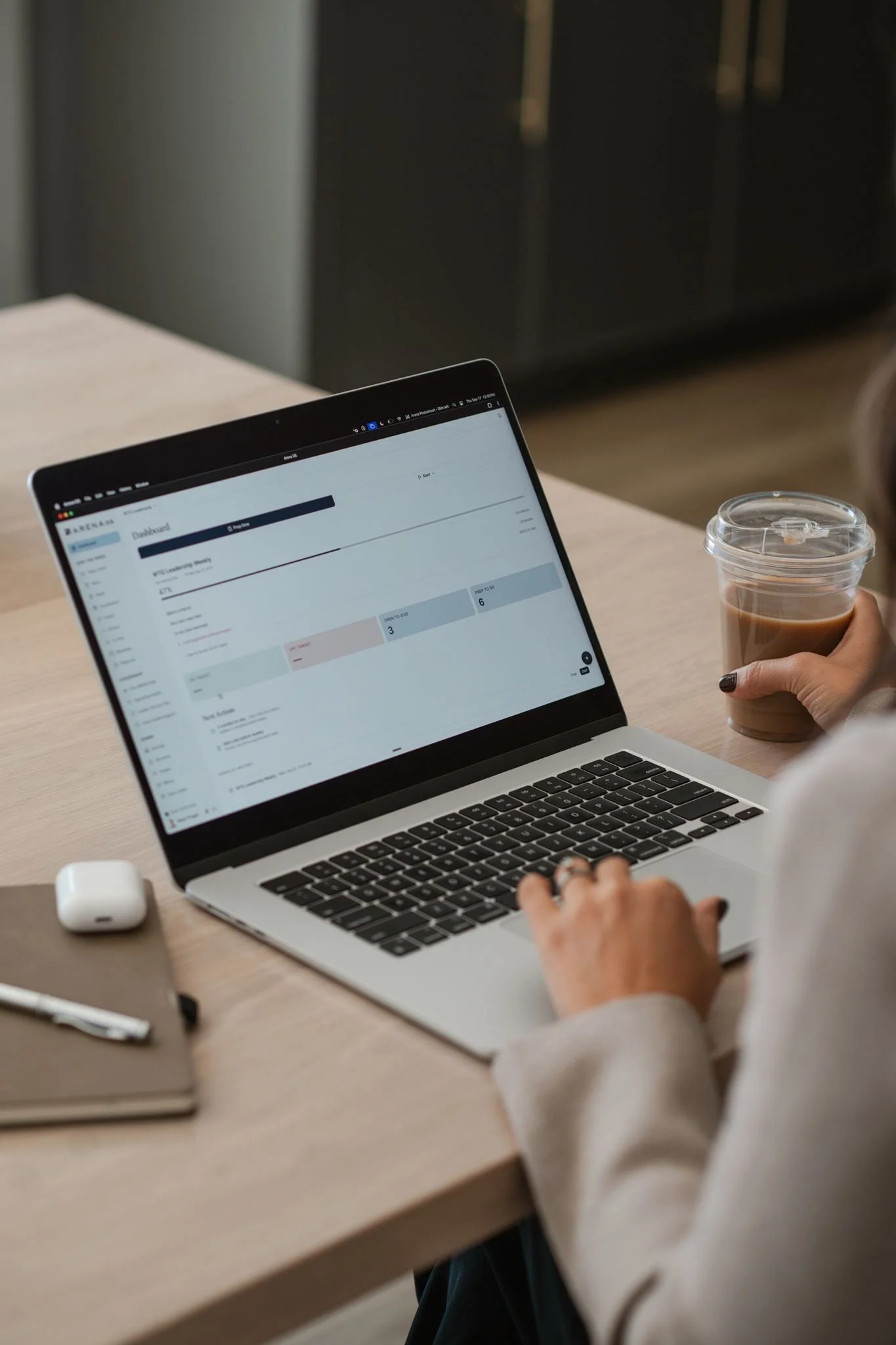
Arena OS is a business operating system for owner-operators: the methodology and the software in one platform. It gives your company a shared direction, a Team Chart where every function has one named owner, a live Scoreboard of the numbers that matter, and a weekly meeting cadence that surfaces problems early and closes commitments. The goal is a specific one: a business that executes without depending on you, which is also what makes a business genuinely valuable.
-
Owner-led companies doing $1M or more in revenue, with a leadership team in place or one that clearly needs to be, where the cost of everything routing through the owner has started to bite. If you are earlier than that, the free assessment will give you an honest read, and it will tell you if you are early.
-
No, and we would not talk down EOS to sell you something. EOS gave tens of thousands of companies their first real operating discipline, and if you have run it, that experience is an asset here, not a false start. Like every serious operating system, including EOS itself, Arena stands on what came before, drawing on the best of the systems that shaped this field. It was built by an operator who ran EOS in his own companies, liked it, and kept finding places where he wanted the system to go further. He wanted the install measured in days rather than months, arriving already connected to the company's real data instead of leaving that work to the team, because in today's environment speed of execution is the difference between leading and getting left behind. He wanted preparation built into the meeting cadence, because better prep means better ideation, and better ideation means problems actually get solved. He wanted a scoreboard that could carry his companies' actual numbers, pulled from the systems where the business already lives, rather than what fits in a weekly self-rating. And he wanted the meetings themselves scored, so an owner, a leader in a one-on-one, or one day a buyer can see in real numbers how independent the company is becoming. The best-run companies are masters of the details. The sharper the operating system, the better the business performs.
-
The fundamentals of a good operating system are universal and timeless: clear direction, one owner per function, numbers reviewed on a rhythm, problems surfaced early. No system invented those, and every serious one is built on them, ours included. Arena draws openly on that lineage, including open-book management and The Great Game of Business, where companies win because everyone can see the score and knows their part in moving it. What separates operating systems is how completely those principles are organized and how well they hold up in daily use. Arena's edge is that the methodology and the software are one thing, built together by an operator running his own companies on it, so the system is enforced by the tool rather than remembered by the team, and it improves continuously with the technology available today. The principles are old. The execution is not.
-
Systems usually fail in one of two places: they never leave the leadership team, or they depend on the owner personally enforcing them. Arena is built against both. The install reaches every seat, not just the people in the Monday meeting, and the cadence is carried by the software and the Scoreboard rather than by your personal follow-up. A system that lives only at the leadership layer has not been installed, it has been advertised.
-
The honest answer is that a tool nobody is accountable in does not get used, which is why Arena starts with accountability rather than features. When a person owns a seat, the seat owns numbers, and those numbers come up every week in a meeting they attend, using the system stops being optional and starts being how their week runs. Data entry is kept deliberately light: most numbers flow in from the systems you already use, and what is entered by hand is entered once, by its owner.
-
It starts with a conversation. We look at your business together and decide whether Arena is a fit. If it is, the install is three full days with your leadership team. Day one, Discovery: anchor your identity and ready your team. Day two, Annual Strategy: envision the future and navigate the year. Day three, your first quarter: plan this quarter's to-dos and get your weekly meeting running. You leave with a working system and help getting your numbers live, not an empty tool.
-
No. The point of the system is that it runs without us the same way it runs without you, but getting there is a relationship, not a handoff. You will have direct access to us through the platform, and the cadence itself, the weekly meetings and quarterly sessions, is where the system gets tuned as your business changes.
-
As long as it's worth it. Coaching is paid by the day, so you can take over your own sessions whenever you're ready. Our top-performing teams keep a coach for the quarterlies and the annual, because an outside voice in the room is what keeps a good system getting better. It also gives the people at the top of the chart, the owner, the CEO, the leaders who otherwise answer to no one, a point of real accountability. And if the business changes hands, your coach can carry the new owners through the transition, so the system that made the company transferable also makes the transfer stable.
-
Arena is priced in two parts. The platform is from $12 USD per user per month, with a 10-user minimum and $8 per user above 50. Coaching is paid by the day, $2,000 to $6,000 USD per full-day session depending on your coach. Year one is six days: the three-day install, then a quarterly day each quarter. Every year after is five: a two-day session to open the year, then a quarterly day each quarter. No long-term contract. Our guarantee: we give more value than we charge, and if a session doesn't deliver that, we'll make it right. Book a discovery call and we'll match you with a coach and their rate.
-
At either end of the range the math is the same, only the shape changes. If you already have a real team, you are already paying for the leverage: the payroll is committed whether it pulls in one direction or twelve. If a system gets even twenty or thirty percent more of what you already pay for moving in the same direction, that is one of the largest returns available to you, and it costs no new headcount. If you are smaller and everything still routes through you, the cost shows up differently: you do not have years or energy to spend moving in the wrong direction, and every week without clarity on the highest-leverage move is value that does not come back. Either way, running without clear direction and owned numbers costs you something every single day, in your own time or in leverage you are already paying for. The free assessment takes about seven minutes and gives you an honest read on exactly where you stand, including a straight answer if you are too early for a full system. Start there.
-
Wherever possible, yes, and that is a design principle, not a feature list. Arena is built to run on your real numbers, not re-typed ones: data flows in automatically from the systems where your business already lives, your accounting platform, point of sale, scheduling and booking systems, with Google Calendar and Tasks carrying the meeting cadence and follow-ups. Every number that arrives automatically is a number nobody mistyped and nobody spent an evening entering, which is where most of the friction and error in weekly reporting actually comes from. We keep extending that reach with the integrations and AI available today. What connects to what is part of scoping your install.
-
Use one, absolutely. We do. But an operating system is not an information problem, it is an accountability problem, and accountability cannot be delegated to a model. Humans still make the decisions, and humans still own the outcomes. An AI can summarize, draft, and surface almost anything now, and that is exactly why the other half matters more: as information gets cheaper and more abundant, the easier it becomes to drown in it, and the more a business needs one shared place where the team agrees on the few numbers that matter, puts one name beside each, and reviews them on a rhythm that does not slip. That need grows with every new tool, it does not shrink. Arena uses AI as leverage inside the system. It does not ask AI to be the system.
-
A seven-minute diagnostic that measures one thing: does the business run on you, or on a system. It scores five dimensions: Direction, Accountability, Numbers, Cadence, and Independence, shows you your two biggest levers, and gives you an honest read, including "you may not need us yet" when that is the truth. No sales call required to see your result.